The Dangers of Lake Superior and the Great Lakes
by Christopher Atkinson, PhD in Geography and Earth Science
Visitors to Lake Superior must be aware of the magnificent nature of the Lake. Lake Superior is the largest of the great lakes. Not only is Lake Superior spectacular to observe, but it also harbors some inherent dangers that smart travelers will educate themselves about so hopefully they can act accordingly. These dangers include cold water, deep water, strong waves, rip currents, and overconfidence.
Cold Water
Men, women, and children must understand that Lake Superior is a very cold lake year-round. Its annual average water temperature is 40 degrees Fahrenheit. Gordon Lightfoot in his famous ballad “The Wreck of the Edmund Fitzgerald” warned of icy waters when he spoke of the Lake’s water column as an “ice-water mansion” (Gordon Lightfoot 1976). As seen in shipwrecks, cold water in Lake Superior prevents dead bodies from decaying.
Swimming in Lake Superior may look refreshing, but care is required due to the cold temperature, which magnifies the other risks described below.
Water Depth
Lake Superior is a very deep lake with an average depth approaching 500 feet. This voluminous capacity does not necessarily represent all shorelines because there are both gradual depths and severe drop-offs in the zones where people typically swim.
One of the best examples of a gradually-sloping shoreline appropriate for swimming is Park Point in Duluth, Minnesota.

In contrast, severe drop offs to impressive depths occur along Minnesota’s North Shore, such as Shovel Point. Swimmers must be aware of the type of beach they visit before entering the water. Take care to avoid extreme drop offs to ensure safety.
Strong Waves
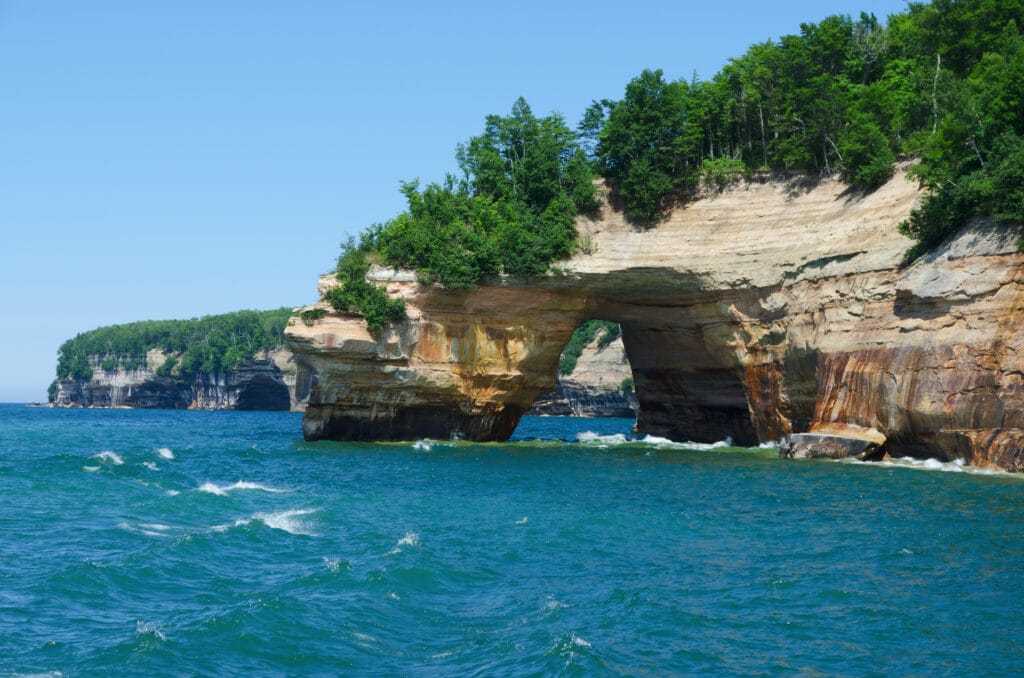
Lake Superior is a large lake measuring 350 miles east to west and 160 miles north to south. The massive size of the Lake can occasionally lead to the production of large waves. These impressive waves roll in both the open-water and near-shore zones of the Lake.
The largest waves move in the open Lake where fetch is maximized. Fetch is the open-water distance over which winds blow. If there is a strong wind from the east, the east-to-west width of the lake is considered the fetch. Strong, long-duration winds over an expansive open-water distance will produce the largest waves.

Strong northeasterly winds tend to produce some of the largest waves at Park Point and along Canal Park. This is great if you want to watch the waves come crashing in. But avoid swimming due to the high waves and water currents on these days.
If you are looking for great waves on a windy day, head to Brighton Beach just north of Duluth. You can easily view the waves from the comfort of your car and marvel at the majesty and power they possess.
Waves that form over open water influence the shoreline and near-shore environment. While the near-shore waves don’t match the impressive heights found in the open Lake, high waves seaward generally make for high-surf conditions in the near-shore zone where local and tourist swimmers abound.
Rip Currents
Thankfully, local organizations recognized the need for some type of warning system to alert swimmers to the dangers of entering the near-shore zone during high-surf conditions. Specifically for Duluth, the Minnesota Sea Grant folks spearheaded the installation of a warning system using colored flags. At the entrance to Park Point in Duluth, a flag is displayed indicating the surf conditions. A green flag indicates little risk to swimmers, a condition of light winds and low waves. A yellow flag shows the need for caution when entering the water. Fresh (moderate) breezes will produce some medium-height waves with enough force to knock swimmers off their feet. A red flag indicates high winds and waves. It is strongly recommended to stay out of the water since the greatest risk for rip currents exists in these conditions.
A rip current is a rapidly-moving return flow of water to the Lake. These currents form in low spots in sand bards and along shorelines. A swimmer caught in one of these flows can be quickly overcome as they are swept away from shore. If caught in a rip current, swim parallel to shore to escape the water’s grip. The colored flags at the entrance to Park Point warn of sea conditions and the likelihood for rip currents, so heed the warnings.

Overconfidence
It is a mistake to underestimate the power of Lake Superior. Resist the urge to be overconfident in your abilities to manage water which looks benign from the shore. Any water condition will compromise your abilities and test your resolve. Don’t challenge the Lake during marginal swimming conditions because you will lose, so quell your unwarranted overconfidence. Enjoy Lake Superior and ensure a return visit.
Conclusion
Lake Superior water dangers vary but the educated traveler will take these into account during their visit to the region.